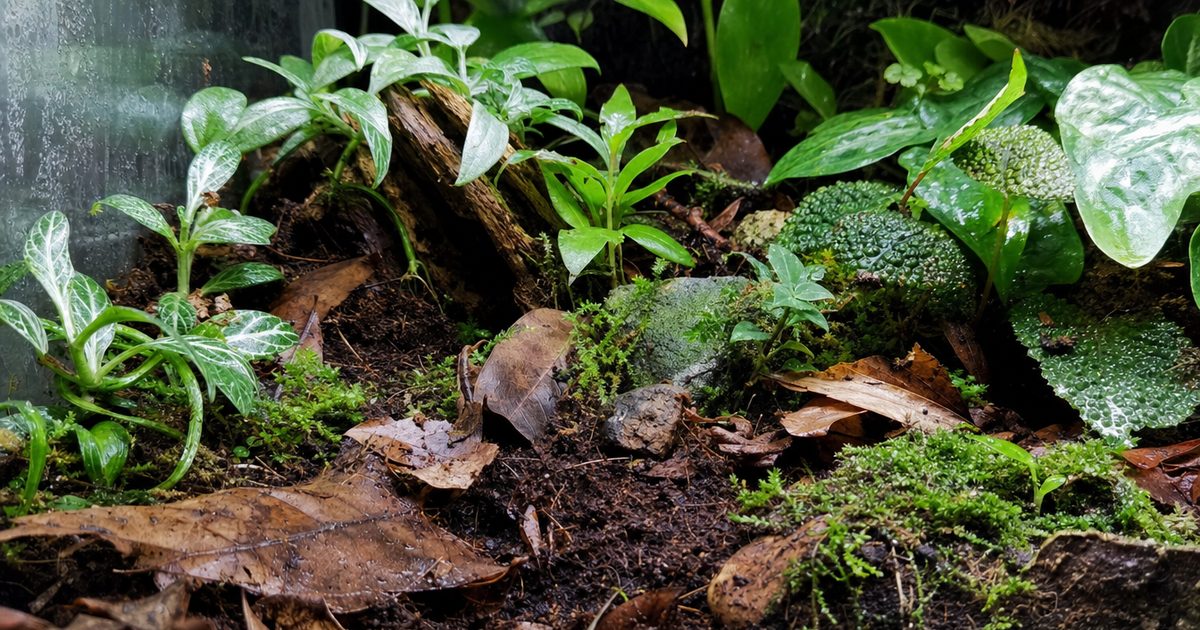
The substrate question — “what bedding should I use?” — looks like a shopping decision and is really a humidity decision. The same substrate that’s perfect for one of my animals would be wrong for another, not because one product is better, but because each species wants a different humidity, and substrate is one of the main tools you use to hold it. So there’s no universal “best” bedding, only the right one for the animal and the humidity range it needs.
I keep a leopard gecko, a crested gecko and a ball python — three very different humidity worlds — so this is a difference I live with daily.
Substrate is a humidity tool first
Before picking a product, decide what humidity range the species needs. A desert-edge animal that wants it dry needs a substrate that doesn’t hold moisture and a setup that lets the enclosure breathe. A tropical animal that wants it humid needs a substrate that holds moisture and slowly releases it, plus a setup that doesn’t dump all the humidity out the top. Pick the humidity target, then pick the substrate that helps you hold it. Do it the other way around and you’ll fight your own bedding forever.
This is also why a stick-on dial isn’t the only measurement that matters. A hygrometer — ideally a digital probe one — tells you whether your substrate-and-setup combination is actually holding the range, the same way a thermometer probe tells you about the floor temperature.
How it plays out across my animals
Without turning this into a care sheet, the contrast is the lesson:
- The leopard gecko wants it largely dry, with one pocket of higher humidity. So the main floor is a substrate that stays dry, and the humidity lives in a dedicated humid hide — a small box with damp substrate it can duck into to help with shedding — rather than misting the whole enclosure and making the dry animal live in damp.
- The crested gecko is the tropical, arboreal counterpoint — it wants higher ambient humidity, so the substrate holds moisture, misting is part of the routine, and the whole enclosure runs more humid. What would be “too wet” for the leopard gecko is “correct” here.
- The ball python wants a moderate, often higher humidity that spikes during a shed, so its substrate holds moisture well and I lean on substrate depth and the enclosure type to hold that range — plus a humid hide as a reliable damp retreat.
Same keeper, same room, three different substrate-and-humidity answers. That’s the whole point.
The humid hide trick
For the animals that mostly want it dry but need some moisture, the humid hide is the move I reach for most. Instead of soaking the entire enclosure and stressing a dry-loving animal, you give it one small, enclosed box with damp substrate it can choose to use. It localises the humidity to where the animal wants it, when it wants it — usually around a shed — without wrecking the dry gradient everywhere else. It’s the elegant fix to “my animal needs dry conditions but is having shedding trouble.”
Depth and the dry-species warning
Two more practical points from keeping:
- Depth matters for moisture-holding substrates — too shallow and it dries out and stops buffering humidity; deeper holds the range longer and, for burrowers, lets them dig. Depth is part of the humidity tool, not just décor.
- Some species must stay dry, and for those, a moisture-holding substrate run damp is a genuine welfare problem, not a preference. This is exactly the kind of thing I won’t hand-wave — match the substrate to the species’ actual requirement and verify it, because “humid is natural” is true for some animals and harmful for others.
Where the numbers come from
Target humidity ranges and substrate guidance here come from reputable herpetological references and product documentation, given as ranges, and I verify them for the exact species and morph. I don’t invent humidity targets and I don’t bench-test substrates — I match published guidance to the animal and confirm with a hygrometer.
If you want this turned into specifics for a ball python’s bedding — types, depth, and how it interacts with humidity — the best ball python substrates guide covers it, sourced rather than guessed.
This is general husbandry information from my own keeping experience, not veterinary advice. Humidity ranges and suitable substrates vary by species and morph and come from manufacturer documentation and herpetological references — always verify for your animal, and see a qualified reptile vet for any health concern.