Best Ball Python Substrates
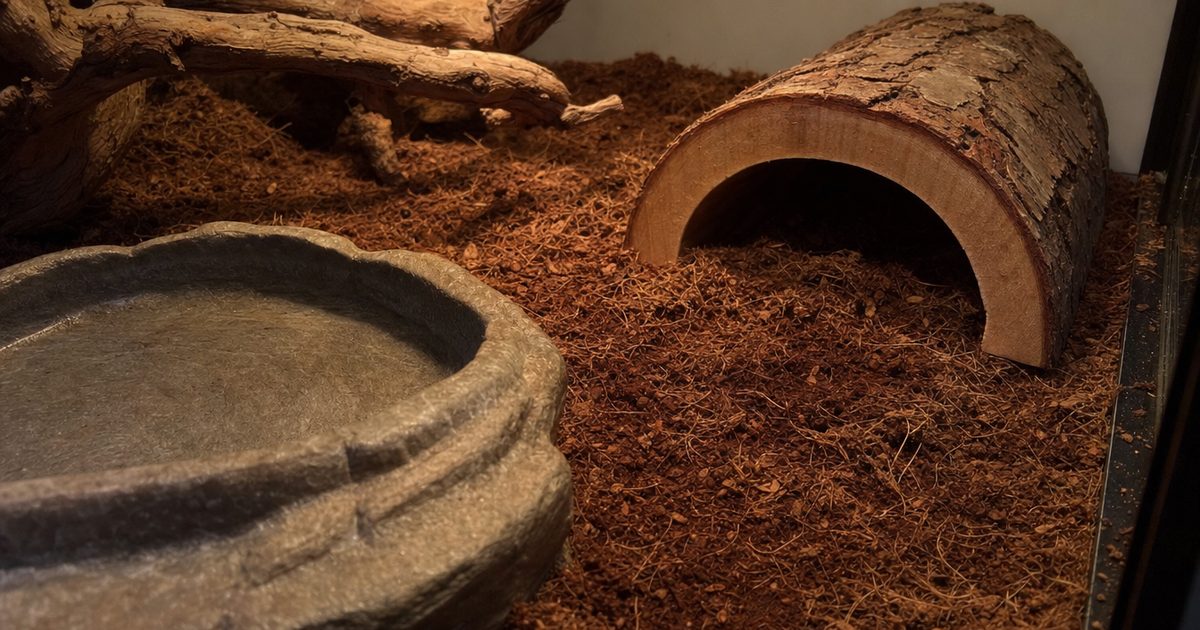
Substrate does more than line the floor — for a ball python it is the main lever on humidity, so the bedding you choose shapes how easy the enclosure is to keep in range and how clean your snake’s sheds are. This guide compares ball python substrates on the specs that decide the fit: type, material, size and use.
Verified picks land in each slot once real product data is in. For now, this is the framework: what each spec changes, so you can shortlist a substrate that holds the right humidity for your setup.
Specs verified against manufacturer details and current Amazon listings — no hands-on testing claims. Humidity ranges are general husbandry guidance sourced to reputable herpetological references; always verify for your snake. This is general husbandry information, not veterinary advice.
How to choose a substrate for a ball python
Substrate is easy to treat as decoration and easy to underestimate. For a ball python it is the single biggest lever you have on humidity inside the enclosure, and humidity is one of the parameters that most affects whether a ball python sheds cleanly and stays comfortable. A ball python comes from a moderate-humidity environment, so the substrate's job is to help hold a moderate range steadily — not bone-dry, not soggy — across the whole enclosure floor, while staying clean and safe to live on. Spec-by-spec, the right substrate makes the target humidity easy to hold; the wrong one turns every day into a misting battle or a mould risk.
Four specifications decide the fit: the substrate type and the material it is made of (which set how much moisture it holds and releases), the particle size (which affects dust and how the substrate behaves), and the intended use (loose bedding across the floor, a humid-hide fill, or the base of a bioactive build). Humidity targets here are general husbandry ranges from reputable herpetological references — verify the figure for your snake, and remember none of this is veterinary advice.
Substrate type and material
Type and material are the core spec, because they set the moisture behaviour. The substrates that suit a ball python are the ones that absorb and slowly release moisture so the enclosure holds a moderate humidity range without the surface staying wet. Spec-by-spec, coconut-fibre (coir) based beddings are a common choice precisely because they hold moisture and release it gradually, buffering humidity between mistings; other moisture-retaining mixes, including cypress-style beddings and bioactive soil blends, work on the same principle.
The materials keepers generally steer away from are the opposite extreme: very dry, dusty, or aromatic beddings. Aromatic softwoods such as cedar are widely avoided because of the oils they release, and bone-dry particulate beddings struggle to support the humidity a ball python needs. The point is not that one branded bag is "best" — it is that the material's moisture behaviour has to match the humidity you are trying to hold in your room. If your room is dry, a strongly moisture-retaining substrate does more of the work for you; if your room is already humid, a lighter mix may be enough.
How substrate controls humidity
This is the spec that ties the page together. Humidity in the enclosure is the product of the substrate, the ventilation, the water bowl and any misting — and the substrate is the part you choose once and live with. A moisture-retaining substrate acts like a reservoir: you add water, it holds it, and it releases it slowly into the air, smoothing out the swings. Spec-by-spec, that buffering is why substrate choice changes how often you have to intervene to stay in range.
The way to manage it is to measure, not guess. A hygrometer with its probe at the enclosure floor tells you the actual humidity the snake experiences; from there you adjust how damp you keep the substrate, how much of a mesh top you cover, and whether you add a humid hide. Treat the published humidity range for a ball python as the target you are tuning toward, verify it for your snake, and let the measured number — not the look of the substrate — drive your adjustments. To pair a substrate type with a depth and a target range for your enclosure, the substrate and humidity calculator walks through it species-by-species.
The humid hide and the three hides
Substrate sets the baseline humidity; a humid hide gives the snake a high-humidity microclimate to retreat into on demand. A humid hide is a covered hide filled with damp sphagnum moss, placed so the snake can tuck inside when it wants more moisture — particularly useful around a shed. Spec-by-spec, running a humid hide alongside the main substrate lets you keep the general enclosure at a moderate range while still offering a damp refuge, rather than soaking the whole floor.
It works best as one of three hides a ball python wants: a hide on the warm end, a hide on the cool end, and the humid hide, so the snake never has to choose between feeling secure and being at the right temperature or humidity. Tight, enclosed hides matter to an ambush species that hides for a living — a snake that feels exposed stays stressed. The substrate, the hides and the gradient work as one system, which is why the habitat and monitoring hub treats them together rather than as separate purchases.
Particle size and use
The last two specs are practical. Particle size affects dust and handling: fine, dusty material is generally less pleasant to live on and work with, while a substrate that clumps into a damp, airless mat can risk mould, so the aim is a texture that holds moisture while still breathing. Use describes the role you are buying it for — a loose bedding spread across the whole floor, a moisture-holding fill for the humid hide, or the base layer of a bioactive enclosure where live cleanup organisms break down waste. Spec-by-spec, the same coir-based material can serve all three uses, so match the bag to the job and the volume to your enclosure's floor area and depth.
Reading the comparison table
When verified picks land, the comparison table above lines every substrate up on the same specs — type, material, size and use — so you can match a bag to your job rather than to a label. Start at the "Best for" column to find the closest use case, whether that is loose bedding for the whole floor, a moisture-holding fill for a humid hide, or a bioactive base, then read the material to judge how it will behave in your room's humidity. Spec-by-spec, the deciding factor is almost always moisture behaviour against your measured humidity, not the brand on the bag. The goal is the same every time: a substrate that holds your target range steadily without going soggy or dusty, and that is safe for a snake that lives on it.
A useful way to shop is to settle the number first and the product second. Decide the target humidity range for your snake and measure what your enclosure currently holds, then choose the substrate whose moisture behaviour closes the gap — a strongly moisture-retaining coir mix if you run dry, a lighter blend if you already sit in range. That keeps you from over-buying for a problem you do not have. The substrate and humidity calculator turns your species and footprint into a substrate type, depth and target range to shop against.
Closing the loop back to the enclosure
Substrate is the habitat layer that sits on the floor of everything else, so it is also where the beginner setup loop closes. The humidity a substrate can hold depends partly on the enclosure that surrounds it — an insulated, well-chosen enclosure makes a moderate range far easier to keep than a leaky one. If you are still settling the foundation, head back to the guide to the best ball python enclosures to see how material and ventilation set the stage for humidity, dial in the substrate type, depth and target range with the substrate and humidity calculator, and compare the wider habitat layer — hides, monitoring and humidity control — in the habitat and monitoring hub.
The substrates compared
| Best for | Type | Material | Size | Use |
|---|---|---|---|---|
| Best overall | Coconut chip | Coconut husk chips | 72 quart | Primary substrate (humidity-holding) |
| Best budget | Coconut chip | Coconut husk chips | 6 quart | Primary substrate (small/trial bag) |
| Best for humidity | Coconut fiber (coir) | Compressed coco coir bricks | 6-pack compressed bricks | Humidity-boosting substrate / mix-in |
| Best bioactive base | Bioactive soil blend | Soil, coir, organic forest blend | Bagged blend | Bioactive base layer (with cleanup crew) |
| Best naturalistic | Cypress mulch | Natural cypress mulch | Pack of 2 | Naturalistic humid substrate |
Our top picks
Best overall: ReptiChip Reptile Substrate Coconut Chip Bedding for Ball Pythons and Reptiles, 72 Quart

Best overall
ReptiChip Reptile Substrate Coconut Chip Bedding for Ball Pythons and Reptiles, 72 Quart
ReptiChip
- Type: Coconut chip
- Material: Coconut husk chips
- Size: 72 quart
- Use: Primary substrate (humidity-holding)
ReptiChip is a coconut-husk chip bedding that holds humidity well and resists mold, a long-standing favorite for ball pythons. It suits keepers wanting one reliable primary substrate that maintains a stable humid environment.
Last checked 2026-06-15
Best budget: ReptiChip Reptile Bedding Loose Coconut Chip Substrate, 6 Quart

Best budget
ReptiChip Reptile Bedding Loose Coconut Chip Substrate, 6 Quart
ReptiChip
- Type: Coconut chip
- Material: Coconut husk chips
- Size: 6 quart
- Use: Primary substrate (small/trial bag)
This smaller loose bag of ReptiChip gives the same coconut-chip substrate at a low entry price. It suits keepers with a single small enclosure or those trialing coco-chip bedding.
Last checked 2026-06-15
Best for humidity: Halatool 6 Pack Coconut Fiber Reptile Substrate, Compressed Coco Coir Bedding for Humidity

Best for humidity
Halatool 6 Pack Coconut Fiber Reptile Substrate, Compressed Coco Coir Bedding for Humidity
Halatool
- Type: Coconut fiber (coir)
- Material: Compressed coco coir bricks
- Size: 6-pack compressed bricks
- Use: Humidity-boosting substrate / mix-in
These compressed coco-coir bricks expand into a fine fiber that holds moisture well, ideal for raising and maintaining enclosure humidity. It suits keepers needing extra humidity for a ball python in a dry climate.
Last checked 2026-06-15
Best bioactive base: Bugzy Bugs Natural Forest Blend Bioactive Substrate for Reptile Terrariums

Best bioactive base
Bugzy Bugs Natural Forest Blend Bioactive Substrate for Reptile Terrariums
Bugzy Bugs
- Type: Bioactive soil blend
- Material: Soil, coir, organic forest blend
- Size: Bagged blend
- Use: Bioactive base layer (with cleanup crew)
This forest-blend bioactive substrate is formulated to support live plants and a cleanup crew of isopods and springtails. It suits keepers building a self-cleaning bioactive ball python vivarium.
Last checked 2026-06-15
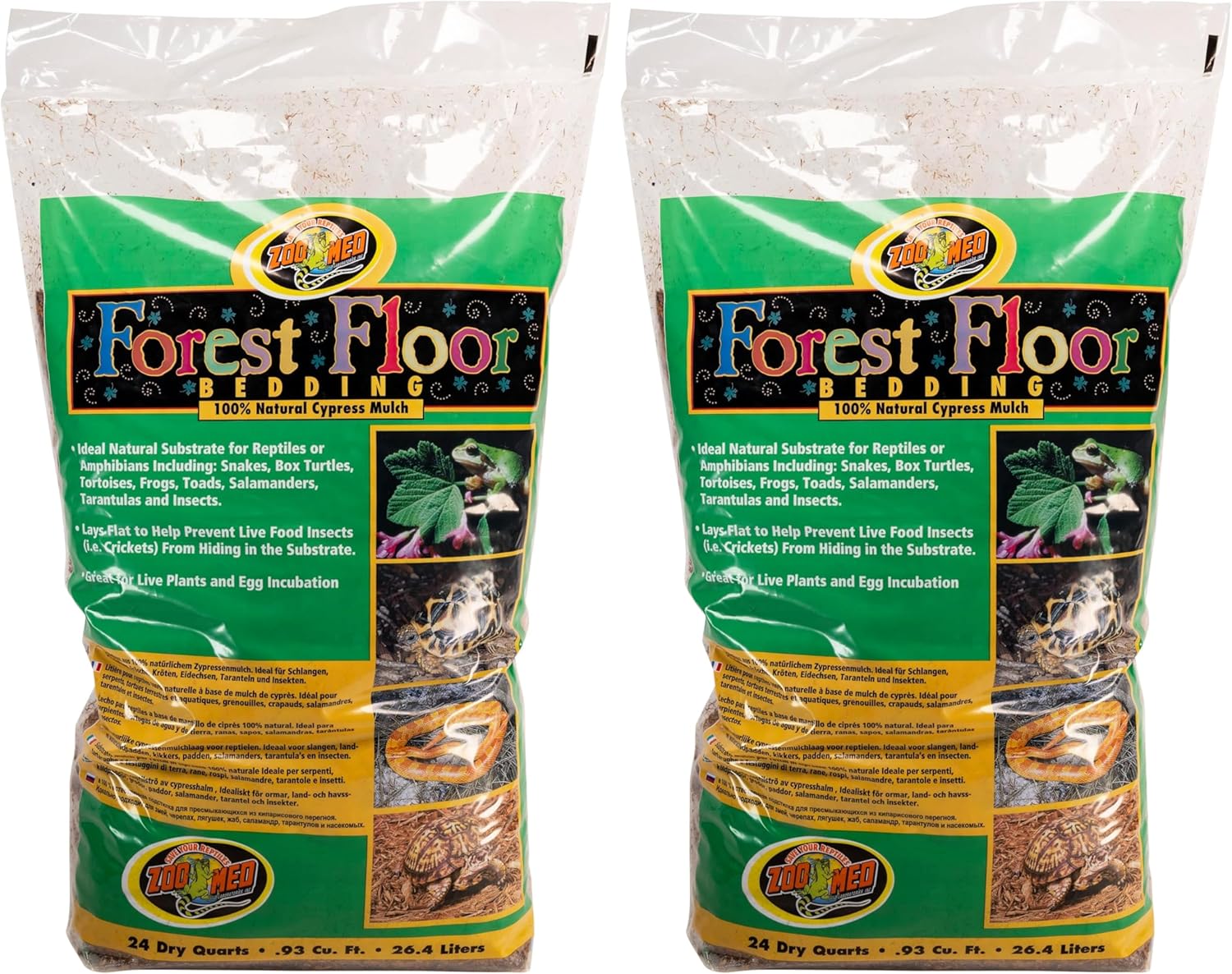
Best naturalistic: Zoo Med Forest Floor Bedding Natural Cypress Mulch Reptile Substrate (Pack of 2)
Best naturalistic
Zoo Med Forest Floor Bedding Natural Cypress Mulch Reptile Substrate (Pack of 2)
Zoo Med
- Type: Cypress mulch
- Material: Natural cypress mulch
- Size: Pack of 2
- Use: Naturalistic humid substrate
Zoo Med Forest Floor is a natural cypress mulch that gives a woodland look and holds humidity for tropical reptiles. It suits keepers wanting a naturalistic, humidity-friendly substrate for a ball python.
Last checked 2026-06-15
Frequently asked questions
What is the best substrate for a ball python?
A ball python needs a substrate that holds a moderate humidity range without staying soggy or turning dusty — coconut-fibre-based beddings and similar moisture-retaining mixes are common choices. The right pick depends on your humidity and whether you run a humid hide or a bioactive base. Treat humidity targets as general husbandry ranges and verify for your snake.
Do I need a humid hide for a ball python?
A humid hide — a covered hide with damp sphagnum moss inside — gives a ball python a high-humidity microclimate to retreat to, which supports clean sheds. Many keepers run one alongside their main substrate. See the habitat hub for how the hides and substrate work together.
What substrate should I avoid for a ball python?
Keepers generally avoid very dry, dusty or aromatic beddings (such as cedar) and substrates that cannot hold any humidity for a species that needs a moderate range. The goal is a substrate that supports the target humidity safely. This guide compares the options on the specs that matter.
How deep should ball python substrate be?
Substrate depth is set by what you want it to do — enough to hold moisture and let the snake feel the floor, and more if you want the snake to be able to burrow or are running a bioactive base. Depth also interacts with how much moisture the layer can buffer. Pair the depth with a target humidity range using the substrate and humidity calculator, and verify the range for your snake.
Is aspen good for a ball python?
Aspen is a dry, loose bedding favoured for species that need low humidity, and it does not hold moisture well, so it is generally a poor match for a ball python’s moderate-humidity needs and can mould if kept damp. Moisture-retaining substrates such as coconut-fibre mixes are the more common choice. Measure your humidity and verify the right range for your snake.
Can I keep a ball python on a bioactive substrate?
Yes — a bioactive base is a moisture-retaining soil blend with live cleanup organisms that break down waste, and it can hold a stable humidity range well for a ball python. It asks for more setup and planting than plain bedding. Whether bioactive or loose substrate, the goal is the same target humidity, measured with a hygrometer and verified for your snake.