Heating & Thermostats
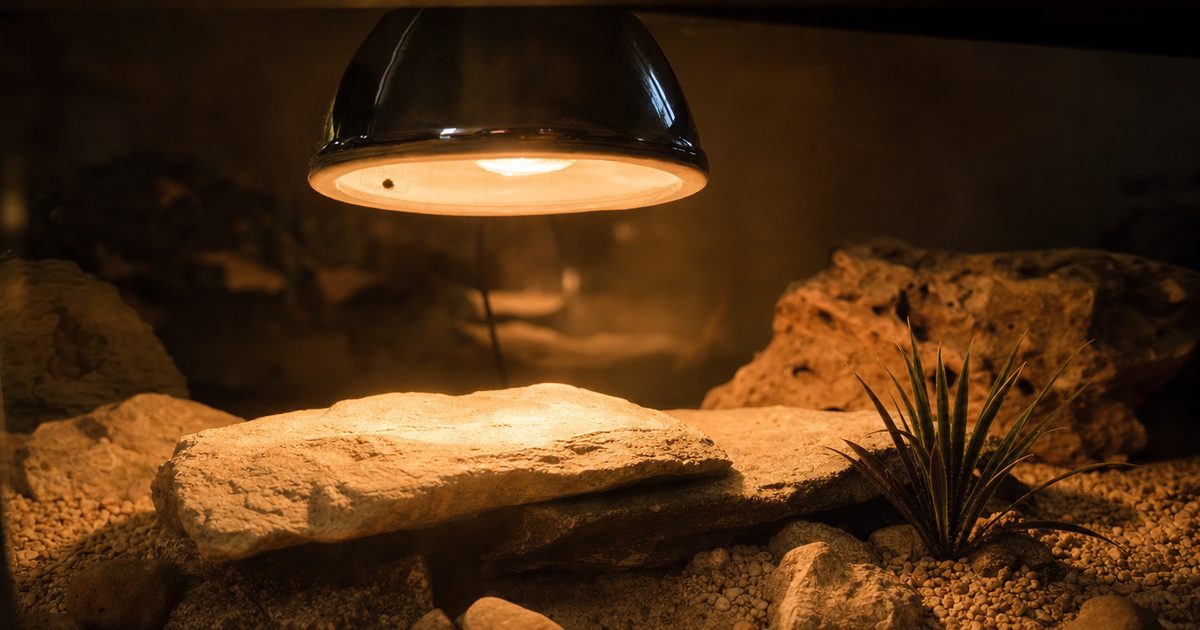
Heating is where a setup is most often quietly wrong — a single warm spot is not a gradient, and an unregulated heat source is a risk. This silo compares the heat sources a beginner will hear about — basking lamps, ceramic heat emitters, and heat panels and mats — sorts out on/off versus dimming thermostats, and walks through building a real temperature gradient. A thermostat is framed as non-negotiable. Specs are verified against manufacturer details and current Amazon listings; no hands-on testing is claimed.
A gradient, not a hot spot
The single most important idea in this silo: a reptile needs a temperature gradient, not just a basking temperature. Because reptiles are ectothermic, they regulate their body heat by moving between a warm end and a cool end — that's thermoregulation, and it only works if both ends genuinely exist. A single warm spot in an enclosure that's warm all over gives the animal nowhere to cool down. The species-specific numbers — the basking temperature, the cool-end temperature, the night-time drop — come from manufacturer documentation and reputable herpetological references, and they vary by species, so verify them for your animal. The job of your heat source is to build that gradient; the job of your thermostat is to keep it safe; the job of your probe thermometer is to prove it's real. The beginner's guide covers the whole order.
The heat sources, compared
There are three families of heat source a beginner will meet, and which one suits depends on the species and what kind of heat it needs.
Basking lamps — light and heat for a daytime zone
A basking lamp produces both light and heat, creating a focused, sun-like basking zone. It's the natural choice for desert baskers like bearded dragons, where the animal needs a hot spot to sit under during the day. The best basking bulbs for bearded dragons guide compares them on type, wattage and coverage. Wattage, mounting height and a timer usually control a basking lamp rather than a dimming stat, because varying power dims the light too.
Ceramic heat emitters — heat with no light
A ceramic heat emitter (CHE) produces heat with no visible light, which makes it useful for night-time warmth or for adding ambient heat without a bright lamp. A CHE gets genuinely hot and must run on a thermostat. Many setups pair a basking lamp by day with a CHE on a thermostat for background heat where the species needs it.
Heat panels and mats — radiant and contact heat
Radiant heat panels mount overhead and warm a broad area gently; heat mats sit under or beside the enclosure and provide contact or belly heat, which suits some ground-dwelling species. Both are unregulated heat sources, so both must run on a thermostat — a mat left unregulated is one of the most common ways a first setup overheats one end of the enclosure.
Why a thermostat is non-negotiable
This is the line I won't soften: any heat source that can run away — a mat, a CHE, a panel — has to run through a thermostat, full stop. A thermostat reads the temperature and cuts or reduces power to hold the warm end in range, so the animal always has a safe place to be. Without one, the warm end can swing far too hot while you're not watching, and there's no gradient to retreat into. A thermostat is not an upgrade or an accessory; it's the part that makes the heat safe.
On/off vs dimming
An on/off (pulse) thermostat switches the heat source on and off to hold a target, which is fine for non-light sources like ceramic heat emitters and heat mats. A dimming thermostat smoothly varies power instead of hard-cycling, which suits situations where you don't want the heat pulsing. The key rule: don't run a light-emitting basking bulb on a dimming stat unless the manufacturer allows it, because dimming the bulb dims the light along with the heat. Match the thermostat type to the heat source.
Featured guides
The current published guides in this silo. More land each batch.
Landing next: ceramic heat emitter guide, best reptile thermostat, on/off vs dimming thermostat, leopard gecko heat mat, ball python ceramic heat emitter, and tortoise heat lamp.
Frequently asked questions
Does a reptile enclosure need a thermostat?
Yes — a thermostat is non-negotiable for any unregulated heat source so the warm end cannot overheat the animal. Day-time basking bulbs are usually controlled by wattage, height and a timer, while heat mats and ceramic heat emitters must run on a thermostat. Build a real gradient and verify it with a digital probe.
On/off or dimming thermostat?
An on/off (pulse) thermostat is fine for non-light heat sources like ceramic heat emitters and heat mats. A dimming thermostat smoothly varies power and is used where you do not want hard cycling. The right type depends on the heat source — never run a light-emitting basking bulb on a dimming stat unless the manufacturer allows it.
What is a temperature gradient and why does it matter?
A gradient is a warm end and a cool end in the same enclosure, so a reptile can move between them to control its own body temperature. Without it, the animal cannot thermoregulate. Building and measuring a real gradient — not just a single basking temperature — is the core of good heating.
Basking lamp or ceramic heat emitter?
A basking lamp produces both light and heat for a focused daytime basking zone, suited to desert baskers. A ceramic heat emitter (CHE) produces heat with no light, useful for night-time warmth or species that need ambient heat without a bright lamp. Many setups use a basking lamp by day and, where needed, a CHE on a thermostat for background heat.