UVB & Lighting
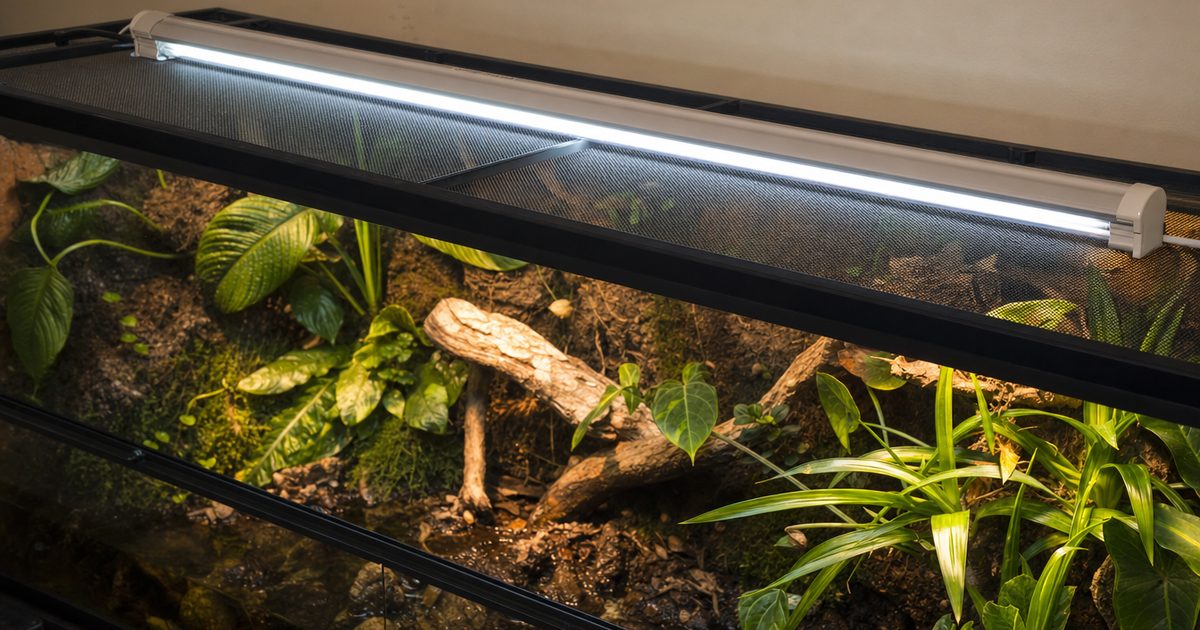
UVB is the part beginners get wrong most often, and for many species it is the one that matters most to the animal’s health. This silo explains UV index by species, compares T5 HO tubes versus compact bulbs, covers lamp distance and mounting height, the replacement cycle (output drops before the bulb dies), and plant or grow lighting. Specs are verified against manufacturer details and current Amazon listings; no hands-on testing is claimed.
Why UVB is the one to get right
UVB lets a reptile produce vitamin D and use calcium properly, which is why getting it wrong is the textbook husbandry failure — and why this is the silo my own origin mistake lives in. My first leopard gecko went under a coil bulb dropped in because the box said "reptile light," and that single wrong choice was part of why the animal went off-colour and off its food. The hard truth is that a UVB problem is invisible until it isn't: the light looks like it's working, so it's easy to assume the animal is getting what it needs when it isn't. That makes UVB the one part of the setup where guessing costs the most, and where sourced parameters matter most. This is general husbandry information — if your animal is unwell, see a qualified reptile vet. The beginner's guide sets the whole picture.
UV index by species
How much UVB an animal needs is set by where it lives in the wild, captured as a target UV index (UVI). A desert basker like a bearded dragon sits in strong sun and needs a high index; a shade-dwelling species like a leopard gecko needs far less. Crested geckos and other crepuscular or forest species fall in between. There's no single "reptile UVB" number — the right index comes from matching the species to a published target and then choosing a tube and mounting height that deliver it. Treat every UVI figure as a general husbandry range from manufacturer documentation and reputable herpetological references, and verify it for your species and morph. The best UVB lights for bearded dragons guide works a high-index species through in full.
T5 HO vs compact UVB
The fixture decides whether the right index actually reaches the animal across the basking area.
T5 HO tube — spreads the right index across the basking zone
A linear T5 HO tube produces UVB along its length, spreading the index across the basking area and reaching the strength higher-requirement species need. Paired with a reflector and mounted at the manufacturer's distance, it's the widely preferred fixture for most setups, especially for high-UVB species. The trade-off is a larger fixture and the replacement cost, but the husbandry case is strong.
Compact and coil bulbs — a small, intense spot
Compact and coil UVB bulbs screw into a single fixture and produce a small, intense spot of UVB rather than spreading the right index across the area. Many are considered inadequate for high-UVB species, and historically some coil designs raised over-exposure concerns. They're cheap and convenient, which is exactly the trap I fell into. For most species the T5 HO tube is the safer, more effective choice — match the fixture to the species and the enclosure size, not to the price tag.
Mounting distance and the replacement cycle
Two numbers turn a UVB tube from "installed" into "working." The first is mounting height or distance: UVB falls off rapidly with distance, so the tube has to sit at the distance the manufacturer specifies for that index — too close risks over-exposure, too far and the animal gets too little. Mesh between the tube and the animal reduces output too, which the charts account for. The second is the replacement cycle: UVB output fades long before the tube stops making visible light, so it has to be replaced on the manufacturer's schedule — commonly every 6 to 12 months for many T5 HO tubes — not when it finally dies. A UV meter lets you verify both, but the manufacturer's documentation is the baseline. A grow or plant light is a separate fixture for live terrarium plants and bioactive builds, and isn't a substitute for UVB.
Featured guides
The current published guides in this silo. More land each batch.
Landing next: UVB light for tortoise, UV light for turtle, T5 vs compact UVB, the UVB replacement schedule, UVB bulb for leopard gecko, and light for crested gecko.
Frequently asked questions
What UVB index does my reptile need?
It depends on the species — a desert basker like a bearded dragon needs a high UV index, while a shade-dweller like a leopard gecko needs much less. The right index and mounting distance come from the manufacturer’s charts for the tube. Treat these as general husbandry parameters and verify for your species.
T5 HO tube or compact UVB?
A linear T5 HO tube spreads UVB across the basking area and reaches the index higher-requirement species need. Compact and coil bulbs produce a small, intense spot and are widely considered inadequate for high-UVB species. Match the fixture to the species and the enclosure size.
How often should a UVB tube be replaced?
UVB output fades before the tube stops producing visible light, so it must be replaced on the manufacturer’s schedule — commonly every 6 to 12 months for many T5 HO tubes — not when it finally dies. Follow the manufacturer’s interval and verify with a UV meter if you have one.
How high should a UVB tube be mounted?
At the distance the manufacturer specifies for that tube and index — too close risks over-exposure, too far and the animal gets too little. Mesh between the tube and the animal also reduces output, which the manufacturer’s charts account for. Always set mounting height from the specific tube’s documentation.