Habitat & Monitoring
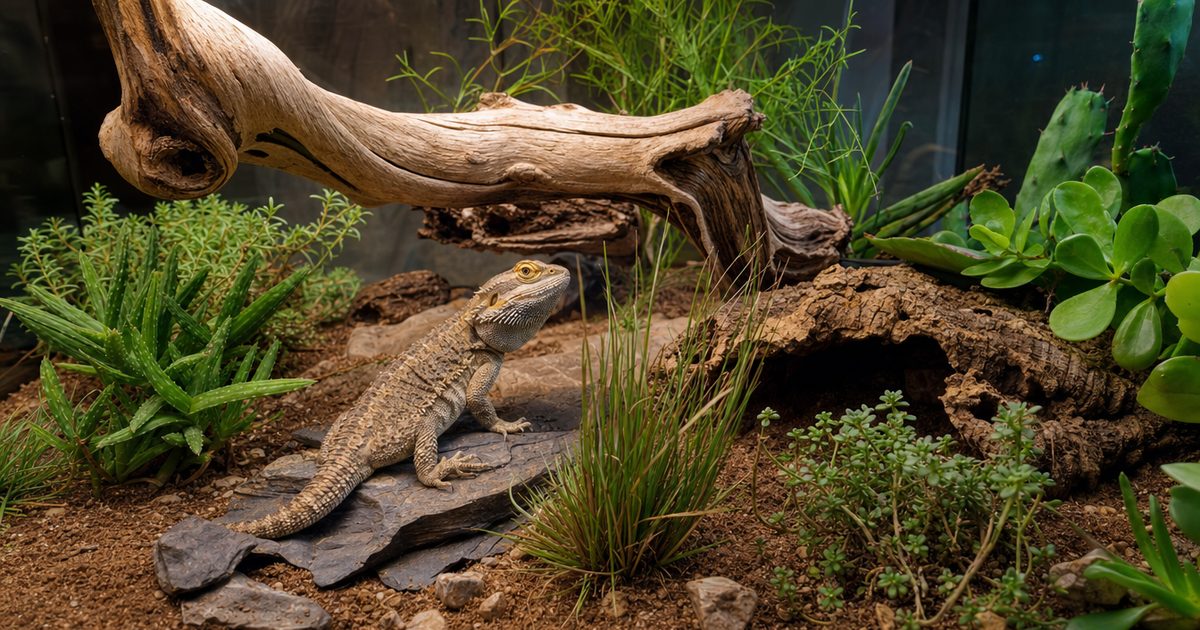
Once the enclosure, heat and UVB are right, the habitat layer makes it a place the animal can actually live well — substrate by species, warm, cool and humid hides, terrarium plants and décor, and the thermometers and hygrometers that prove your gradient and humidity are real. This silo is also home to the setup tools. Specs are verified against manufacturer details and current Amazon listings; no hands-on testing is claimed.
Substrate by species
Substrate is the bedding that lines the enclosure floor, and the right choice is set by the species' humidity needs more than by looks. A humidity-loving snake wants a substrate that holds moisture without going swampy; a desert species needs one that stays dry and low-dust. Depth matters too — burrowing species want enough to dig into, while others just need a clean, manageable layer. Substrate is one of the main levers you have for controlling humidity, which is why it's worth matching carefully. The best ball python substrates guide works a humidity-sensitive species through in detail; for the rest, the substrate & humidity calculator turns a species and enclosure size into a suggested type, depth and target range.
Hides — warm, cool and humid
A hide is cover the animal can retreat into and feel secure, and it's not optional — a reptile without good hiding spots is a stressed one. The baseline most keepers use is at least two hides, one on the warm end and one on the cool end, so the animal never has to choose between feeling secure and being at the right temperature. That detail matters: a single hide on the warm end forces a cold animal to sit exposed to warm up. Many species also benefit from a humid hide — a covered, moist microclimate that helps with shedding and hydration. Match the number and type of hides to the species, and size them snug; a hide that's too open doesn't give the security a tight one does.
Terrarium plants and décor
Plants and décor are where "habitat" starts to look like a habitat, but they earn their place by helping the animal, not just by looking good. Live terrarium plants add cover, humidity and visual barriers, and are the foundation of a bioactive build; they need their own grow lighting, separate from the UVB. Hardscape — branches for climbers, cork bark, leaf litter — adds the sight-lines and cover that make an animal feel secure. The rule from the beginner's guide still holds here: husbandry first, décor later. Once the gradient, UVB and humidity check out, dressing the enclosure is the rewarding last step.
Monitoring — the gear that proves it's real
This is the part that separates a setup that works from one that quietly doesn't. A digital probe thermometer placed at the substrate, where the animal actually sits, confirms your gradient is genuinely a gradient — not a stick-on dial reading the glass. A digital hygrometer placed where the animal spends time confirms humidity is in range. Monitoring gear turns "it looks fine" into actual numbers, and it's the cheapest insurance in the whole setup. My first gecko's near-miss came down to trusting a stick-on dial instead of measuring the floor; a five-dollar probe in the right place would have caught it. Measure, don't guess.
Featured guides
The current published guides in this silo. More land each batch.
Landing next: terrarium plants for vivariums, terrarium kit guide, bearded dragon hide, humid hide guide, best reptile thermometer/hygrometer, and snake bedding.
Frequently asked questions
How many hides does a reptile need?
A common baseline is at least two — one on the warm end and one on the cool end — so the animal never has to choose between feeling secure and being at the right temperature. Many species also benefit from a humid hide. Match the hide setup to your species and verify its needs.
How do I measure and control humidity?
Use a digital hygrometer placed where the animal spends time, not a cheap stick-on dial. Control humidity with the right substrate, a humid hide, misting or a larger water dish as needed for the species. Treat published humidity ranges as general husbandry guidance and verify for your animal.
Do I need a thermometer and a hygrometer?
Yes — a digital probe thermometer at the substrate confirms your gradient is real, and a hygrometer confirms humidity is in range. Monitoring gear is what turns "it looks fine" into actual numbers, which is the difference between a setup that works and one that quietly does not.
What substrate should I use?
It depends on the species’ humidity needs — a humidity-loving snake wants a substrate that holds moisture without going swampy, while a desert species needs one that stays dry and low-dust. The right depth matters too, especially for burrowing species. Match the substrate type and depth to the species and verify it.