Reptile Enclosures & Vivariums
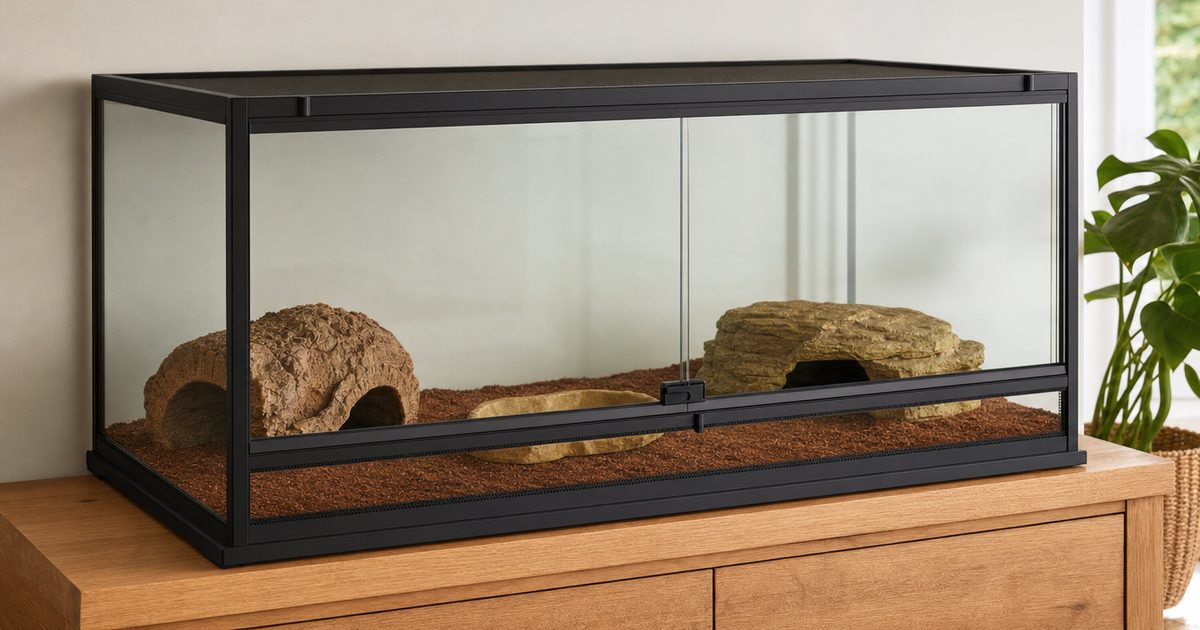
The enclosure is the foundation of the whole setup, and the decision people overthink most. This silo compares the choices a beginner faces — glass terrarium versus PVC vivarium, terrestrial versus arboreal, footprint by species and ventilation — and explains why a bigger enclosure that can hold a real gradient beats a small, uniformly warm box. Specs are verified against manufacturer details and current Amazon listings; no hands-on testing is claimed.
Size for the gradient, not for the room
Start here, because it's the mistake I see most: people buy the smallest enclosure that "looks big enough," reasoning that small and warm feels cosy. It's backwards. A reptile is ectothermic and needs a temperature gradient — a warm end and a cool end it can move between — and a small box simply can't hold one, because the warm end's heat reaches every corner. The enclosure has to be large enough that the cool end stays genuinely cool while the warm end basks. A bigger enclosure that holds a real gradient beats a small, uniformly warm one every time. That's why footprint is the first spec, before material or looks. The beginner's guide walks the whole order if you're starting from scratch.
Glass terrarium vs PVC vivarium
The material question comes down to how well the enclosure holds heat and humidity, what the species needs, and what you want to spend.
Glass terrarium — cheap, available, leaky
A glass terrarium is the easiest enclosure to find and the cheapest to buy, with clear sides and good visibility. The trade-off is that glass loses heat and humidity through the panels, so in a cool or dry room it can be harder to hold a stable gradient or keep humidity up for a tropical species. For a desert basker in a warm room, that leakiness matters far less. Glass is a fine first enclosure as long as you match it to the species and the room.
PVC vivarium — holds heat and humidity, secure sides
A PVC vivarium costs more but holds heat and humidity far better, and its solid, opaque sides give a shy species the sense of security it wants. For humidity-loving species or cooler rooms, PVC makes holding the right parameters much easier — many keepers building a first snake setup land on a PVC ball python enclosure for exactly this reason. PVC enclosures are also typically lighter and front-opening. The downside is purely price and availability — the husbandry case for PVC is strong, which is why so many keepers move to it.
Terrestrial vs arboreal
Orientation follows how the species lives. Terrestrial (ground-dwelling) species — ball pythons, bearded dragons, leopard geckos — need floor space and don't use much height; a long, low enclosure suits them. Arboreal (climbing) species — crested geckos and many tree-dwelling snakes — need vertical space with branches and elevated cover; a tall enclosure suits them. Getting this wrong makes it genuinely hard to give the animal what it needs: a climber in a flat enclosure has nowhere to go, and a ground-dweller in a tall one wastes most of the space. Match the shape to the animal first, then size within that shape for a real gradient.
Ventilation and access
Ventilation balances fresh air against heat and humidity retention. A humidity-loving species in an over-ventilated enclosure dries out; a species that wants drier air in a sealed box risks stale, stagnant air. Glass terrariums and PVC vivariums handle airflow differently, so match the ventilation to the species' humidity needs rather than treating "more airflow" as automatically better. One practical note that's easy to overlook: front-opening access (doors rather than a lift-off top) is gentler on shy species and far easier to live with day to day, since reaching in from above reads as a predator strike to a lot of reptiles.
Featured guides
The current published guides in this silo. More land each batch.
Landing next: 40-gallon bearded dragon tank, PVC reptile enclosures guide, glass vs PVC reptile enclosure, arboreal vs terrestrial vivarium, and corn snake enclosure.
Frequently asked questions
Glass terrarium or PVC vivarium for a reptile?
Both work; the choice is about your room conditions and budget. PVC vivariums hold heat and humidity better and give solid, secure sides, while glass terrariums are cheaper and easier to find but lose heat and humidity through the panels. Match the enclosure to your species’ parameters and verify the minimums for your animal.
How big should a reptile enclosure be?
Big enough to hold a genuine warm end and cool end, sized to your species — a terrestrial species needs floor space, an arboreal one needs height. Bigger is generally better as long as you can still maintain the gradient. Treat published minimums as general husbandry ranges and verify for your species.
Terrestrial or arboreal — does it matter?
Yes. Ground-dwelling (terrestrial) species need floor space and shallow height; climbing (arboreal) species need vertical space with branches and elevated cover. Choosing the wrong orientation makes it hard to give the animal what it needs, so match the enclosure shape to how the species lives.
Why does ventilation matter in a reptile enclosure?
Ventilation balances fresh air and stale-air removal against heat and humidity retention. Too much airflow and a humidity-loving species dries out; too little and you risk stale, stagnant air. Glass terrariums and PVC vivariums handle this differently, so match the ventilation to your species’ humidity needs.
The same get-the-setup-right thinking runs through other backyard animal-keeping hobbies — if you keep bees too, our sister guide to starting your first beehive takes the same welfare-first approach to the hive as we do to the vivarium.