Best Ball Python Enclosures
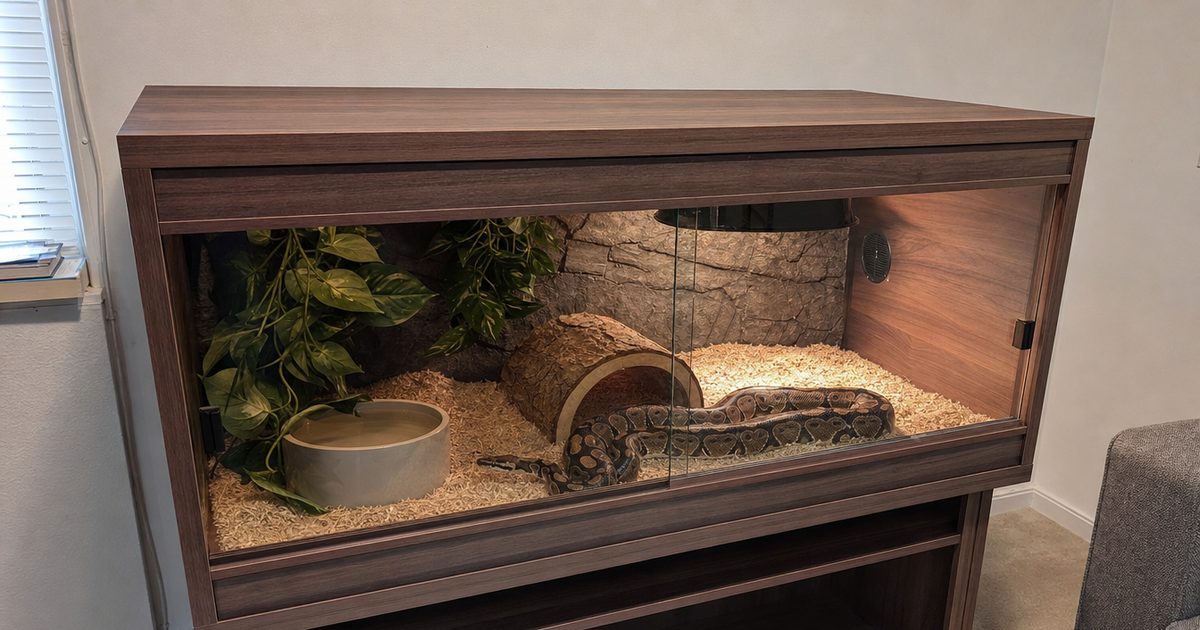
A ball python’s enclosure is the foundation of the whole setup — get the footprint, the material and the heat gradient right, and almost everything else gets easier. This guide compares ball python enclosures on the specs that actually decide the fit: type (PVC vivarium vs glass terrarium), interior dimensions, material, ventilation and front-opening access.
Verified picks land in each slot once real product data is in. For now, this is the framework: what each spec changes, so you can shortlist an enclosure that suits your snake and your room.
Specs verified against manufacturer details and current Amazon listings — no hands-on testing claims. Enclosure minimums are general husbandry ranges sourced to reputable herpetological references; always verify the requirements for your specific snake. This is general husbandry information, not veterinary advice.
How to choose a ball python enclosure
A ball python is a heavy-bodied, ground-dwelling snake that spends most of its life on the floor of the enclosure, moving between a warm end and a cool end and tucking into a tight hide in between. That single fact decides almost everything about the enclosure: it needs usable floor space far more than it needs height, it needs sides solid enough to feel secure, and it needs to hold a stable temperature gradient and a moderate humidity range without a constant fight. Spec-by-spec, an enclosure that gets footprint, material, ventilation and access right is one you can keep in range with a thermostat and a hygrometer rather than one you wrestle every day.
The five specifications below are the ones that actually change the fit. Read them in order: footprint sets the floor plan, material and ventilation set how the enclosure holds heat and humidity, and front-opening access sets how stressful daily care is for a shy snake. None of them is a number you read off a box and forget — each is a lever you tune against your room and your snake.
Enclosure size and footprint
Footprint is the first spec because it sets the length of the thermal gradient. A ball python thermoregulates by moving its whole body between temperatures, so the enclosure has to be long enough to hold a genuinely warm end and a genuinely cool end with a transition between them. A common adult minimum cited in keeping references is a 36 x 18 x 18 inch enclosure — roughly the footprint of a 40-gallon-equivalent — with many keepers going larger. Spec-by-spec, a 36-inch length gives the gradient a ball python needs because it leaves room for a hot retreat and a cool retreat at opposite ends; a short tank forces both ends toward the same temperature and the gradient collapses.
Height matters less. A ball python is terrestrial, not arboreal, so extra vertical space is mostly wasted and can make heating and humidity harder to control. Floor area is the number to maximise. When you compare two enclosures, compare interior length and width first — and remember that a hatchling or juvenile is often started in a smaller, more secure space and moved up as it grows, so the right footprint can change over the animal's life. Verify the current size minimum for your snake's age and length, and treat these dimensions as general husbandry ranges, not fixed rules.
Material: PVC vivarium vs glass terrarium
Material is the spec that most changes how the enclosure behaves day to day. The two mainstream options are a PVC (or similar moulded panel) vivarium and a glass terrarium, and they trade off almost opposite strengths.
A PVC vivarium has insulated, opaque side and back panels. Spec-by-spec, that insulation holds heat and humidity far better than glass, so the enclosure stays in range with less energy and less misting, and the solid dark sides give a shy, ambush-style snake the visual security it wants. The trade-offs are cost and availability — PVC enclosures are generally more expensive and less common on a shelf. A glass terrarium, by contrast, is cheaper, widely stocked, and easy to see into, but glass conducts heat and lets humidity escape through every panel, so a glass enclosure in a dry or cool room can be a constant battle to keep warm and humid, and the see-through sides can leave a nervous snake feeling exposed. Neither is wrong; the right choice depends on your room's baseline temperature and humidity and on your budget. If your room runs cool or dry, the insulation of PVC does real work; if your room is already warm and stable, glass can be perfectly workable.
Ventilation
Ventilation is the spec that balances against humidity. A ball python needs a moderate humidity range and fresh air at the same time, so the enclosure needs enough airflow to prevent stagnant, stale air without venting so freely that humidity drops through the floor. Spec-by-spec, a glass terrarium with a full mesh top vents aggressively — great for a dry desert species, but it can make holding humidity for a ball python harder, so keepers often partially cover the mesh to slow the loss. A PVC vivarium with smaller, placed vents holds humidity more easily and gives you finer control. When you compare enclosures, look at where the vents are and how much open area they represent, and match that to the humidity you need to hold for your species.
Front-opening access
Access sounds like a convenience spec, but for a ground-dwelling snake it is a welfare and stress spec. A front-opening enclosure — with doors that swing or slide at the front — lets you reach in at the snake's level rather than looming down through a top lid. To a prey animal that hides for a living, a hand descending from above reads like a predator strike, while a hand coming in from the front is far less alarming. Spec-by-spec, front-opening access lowers handling stress and makes daily care, spot-cleaning and water changes easier, which is why so many dedicated reptile enclosures are built that way. Top-opening tanks can still work, but expect to be more deliberate and gentle about how you reach in.
Reading the comparison table
When verified picks land, the comparison table above ranks each enclosure on the same five specs in the same order, so you can read across rather than trusting a headline. Start at the "Best for" column to find the use case closest to yours — a first adult enclosure, a budget glass option, a humidity-friendly PVC build — then read the dimensions to confirm the footprint holds a real gradient, the material and ventilation to judge how hard it will be to keep in range, and front-opening to gauge daily handling stress. Spec-by-spec, two enclosures listed at a similar price can behave very differently once you compare insulation and vent area, which is the whole point of comparing on parameters instead of on a star rating. No single enclosure is "best for everyone" — the best one is the one whose specs match your snake's size, your room, and your budget.
If you are setting up your very first enclosure, it is also worth knowing the two mistakes that send the most beginners back to square one: undersizing the footprint so the gradient never forms, and choosing a leaky glass tank in a dry room and then fighting humidity forever. Both are avoidable at the buying stage by reading the dimensions and the material spec before anything else. The beginner's guide to setting up your first vivarium walks the full setup in order, from enclosure to monitoring.
The enclosure is only half the job
Choosing the right enclosure sets up the gradient, but it does not create it. Whatever heat source you add — an overhead basking lamp or a ceramic heat emitter — must run through a thermostat so the warm end can never overheat your snake, and you confirm the actual numbers with a digital probe thermometer at the surface, not a stick-on dial reading the glass. A real temperature gradient on a thermostat is non-negotiable husbandry. From here, the natural next step is the heat: see the guide to the best basking bulbs and heat lamps for how to build and regulate that gradient, then the best UVB lights for the lighting half of the setup. To check the footprint, wattage band and thermostat type your species needs in one place, run the UVB and heat and enclosure matcher, and compare the broader enclosure types in the enclosures hub.
The enclosures compared
| Best for | Type | Dimensions | Material | Ventilation | Front-opening |
|---|---|---|---|---|---|
| Best overall | Glass terrarium | 32" x 18" x 36" (90 gal) | Glass with metal frame | Full screen top | Yes (double doors) |
| Best budget | Glass terrarium | 35 gal (approx 23" x 18") | Glass with frame | Screen top | Yes |
| Best PVC vivarium | PVC vivarium | 36" x 18" x 18" (50 gal) | PVC panels with glass doors | Screen vents | Yes (sliding glass doors) |
| Best glass terrarium | Glass terrarium | 12" x 12" x 24" | Glass with frame | Screen top | Yes |
| Best for growing up | PVC vivarium | 30" x 12" x 12" (20 gal) | PVC panels with glass doors | Screen top | Yes (sliding glass doors) |
Our top picks
Best overall: PROLEE 32" x 18" x 36" Tall Reptile Terrarium 90 Gallon Front Opening Glass Tank with Screen Top

Best overall
PROLEE 32" x 18" x 36" Tall Reptile Terrarium 90 Gallon Front Opening Glass Tank with Screen Top
PROLEE
- Type: Glass terrarium
- Dimensions: 32" x 18" x 36" (90 gal)
- Material: Glass with metal frame
- Ventilation: Full screen top
- Front-opening: Yes (double doors)
- Species-fit: Ball python, larger reptiles
The PROLEE 90-gallon is a large front-opening glass terrarium with a full screen top for easy heat and UVB mounting. It suits keepers wanting a roomy, easy-access display for an adult ball python.
Last checked 2026-06-15
Best budget: URUQ 35 Gallon Glass Reptile Terrarium Front Opening with Screen Top for Reptiles

Best budget
URUQ 35 Gallon Glass Reptile Terrarium Front Opening with Screen Top for Reptiles
URUQ
- Type: Glass terrarium
- Dimensions: 35 gal (approx 23" x 18")
- Material: Glass with frame
- Ventilation: Screen top
- Front-opening: Yes
- Species-fit: Young / smaller ball python
The URUQ 35-gallon is an affordable front-opening glass terrarium with a screen top. It suits budget keepers or those housing a younger ball python before an adult upgrade.
Last checked 2026-06-15
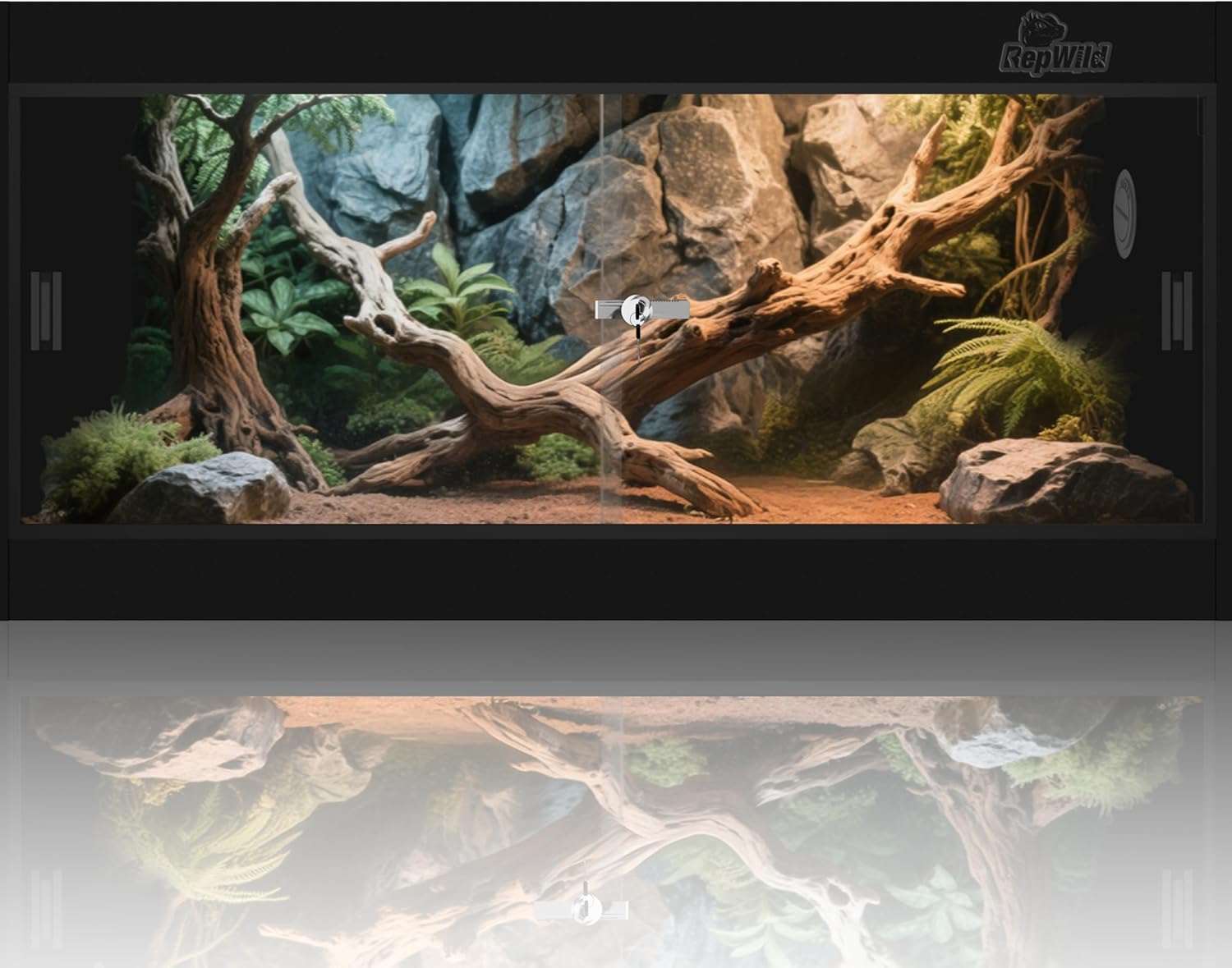
Best PVC vivarium: 50 Gallon PVC Reptile Enclosure 36"x18"x18" with Glass Sliding Doors and Screen Vents for Ball Python
Best PVC vivarium
50 Gallon PVC Reptile Enclosure 36"x18"x18" with Glass Sliding Doors and Screen Vents for Ball Python
RepWild
- Type: PVC vivarium
- Dimensions: 36" x 18" x 18" (50 gal)
- Material: PVC panels with glass doors
- Ventilation: Screen vents
- Front-opening: Yes (sliding glass doors)
- Species-fit: Adult ball python
This 50-gallon PVC enclosure offers insulated, humidity-retaining PVC walls with sliding glass doors at the ideal 36-inch footprint for an adult ball python. It suits keepers who want stable humidity and a durable, lightweight build.
Last checked 2026-06-15
Best glass terrarium: waazoorep 15 Gallon Tall Reptile Glass Tank 12"x12"x24" Front Opening Terrarium with Screen Top

Best glass terrarium
waazoorep 15 Gallon Tall Reptile Glass Tank 12"x12"x24" Front Opening Terrarium with Screen Top
waazoorep
- Type: Glass terrarium
- Dimensions: 12" x 12" x 24"
- Material: Glass with frame
- Ventilation: Screen top
- Front-opening: Yes
- Species-fit: Hatchling ball python, geckos
The waazoorep tall glass terrarium gives a clear-viewing front-opening enclosure with a screen top for a hatchling ball python or arboreal species. It suits keepers who prefer a classic glass display at a smaller size.
Last checked 2026-06-15
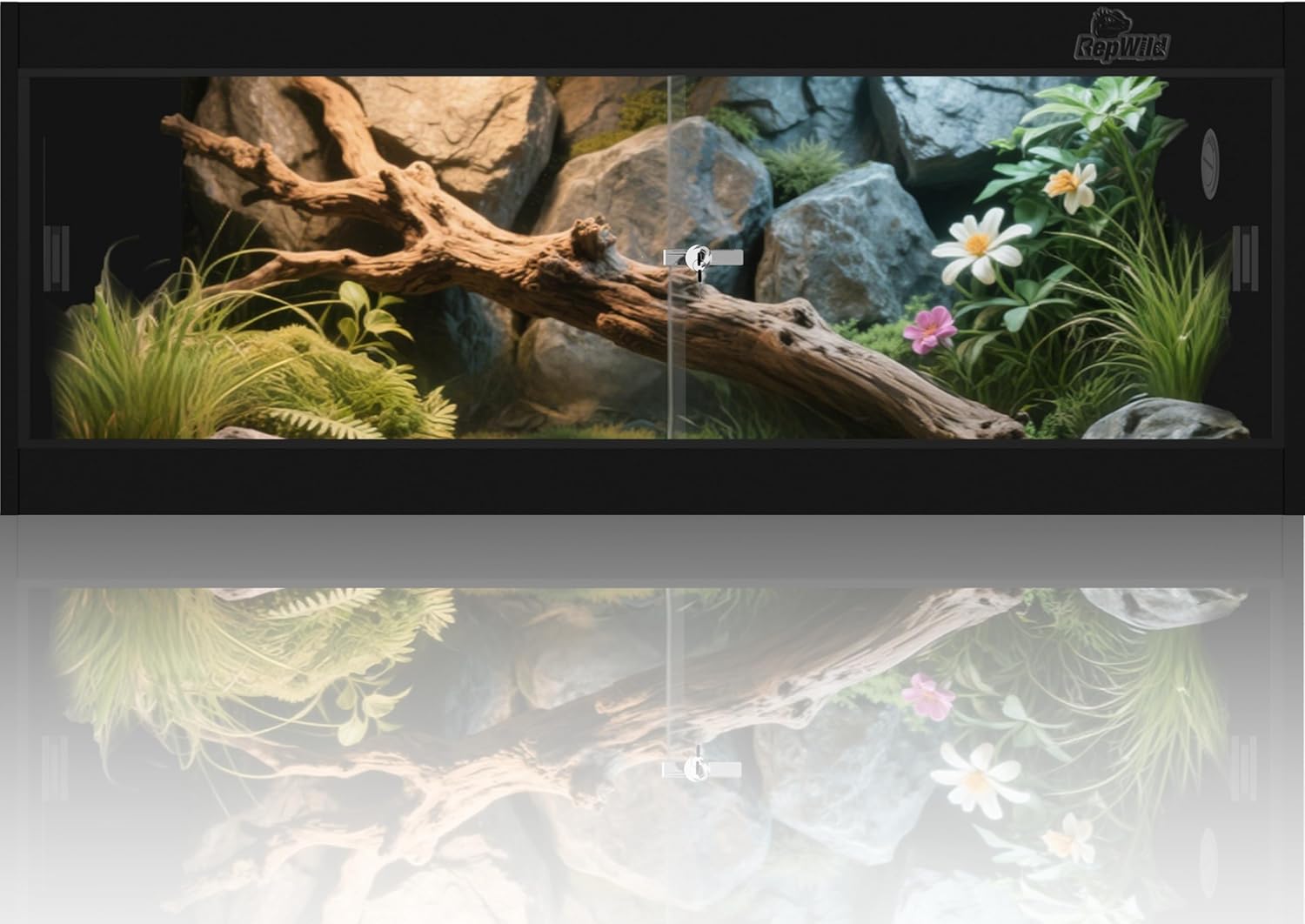
Best for growing up: 20 Gallon PVC Reptile Enclosure, RepWild 30"x12"x12" Terrarium with Screen Top, Glass Sliding Doors & Lock
Best for growing up
20 Gallon PVC Reptile Enclosure, RepWild 30"x12"x12" Terrarium with Screen Top, Glass Sliding Doors & Lock
RepWild
- Type: PVC vivarium
- Dimensions: 30" x 12" x 12" (20 gal)
- Material: PVC panels with glass doors
- Ventilation: Screen top
- Front-opening: Yes (sliding glass doors)
- Species-fit: Juvenile / growing ball python
The RepWild 20-gallon PVC enclosure is a secure, humidity-friendly grow-out size for a juvenile ball python with sliding glass doors and a lock. It suits keepers raising a young snake before stepping up to a 36-inch adult enclosure.
Last checked 2026-06-15
Frequently asked questions
What size enclosure does a ball python need?
A full grown ball python needs floor space, not height — a 40-gallon-equivalent or a 36 x 18 x 18 inch enclosure is a common adult minimum, with bigger generally better as long as you can still hold a warm and cool end. Verify the current minimum for your snake’s size, and treat these as general husbandry ranges, not veterinary advice.
PVC vivarium or glass terrarium for a ball python?
Both can work. PVC holds heat and humidity better and gives solid, dark, secure sides a shy snake prefers, while glass is cheaper and easier to find but loses heat and humidity through the panels. The right choice depends on your room conditions and budget — this guide compares them on the specs that matter.
Does a ball python enclosure need a thermostat?
Yes. Whatever heat source you use, it must run through a thermostat so the warm end cannot overheat the snake. A real temperature gradient on a thermostat is non-negotiable husbandry. See the heating and thermostats guides for how to set one up.
Can a ball python live in a 20-gallon tank?
A 20-gallon tank may suit a hatchling for a time, but it is generally too short to hold a real warm-end-to-cool-end gradient for a growing or adult ball python — an enclosure around 36 x 18 x 18 inches (a 40-gallon-equivalent) or larger is a common adult minimum. Footprint, not height, is the spec that matters. Verify the right size for your snake’s current length.
Should the enclosure be front-opening?
Front-opening access is not strictly required, but for a ground-dwelling snake it lowers handling stress because a hand coming in from the front is far less alarming than one descending from above. Front doors also make daily spot-cleaning and water changes easier. Top-opening enclosures can still work with careful, deliberate handling.
How do I keep humidity up in a glass terrarium for a ball python?
Glass loses humidity through every panel and full mesh tops vent aggressively, so keepers commonly slow the loss by partially covering the mesh, choosing a moisture-retaining substrate, and adding a humid hide. If holding humidity is a constant fight in your room, an insulated PVC vivarium makes the job easier. Measure humidity with a hygrometer and verify the target range for your snake.